
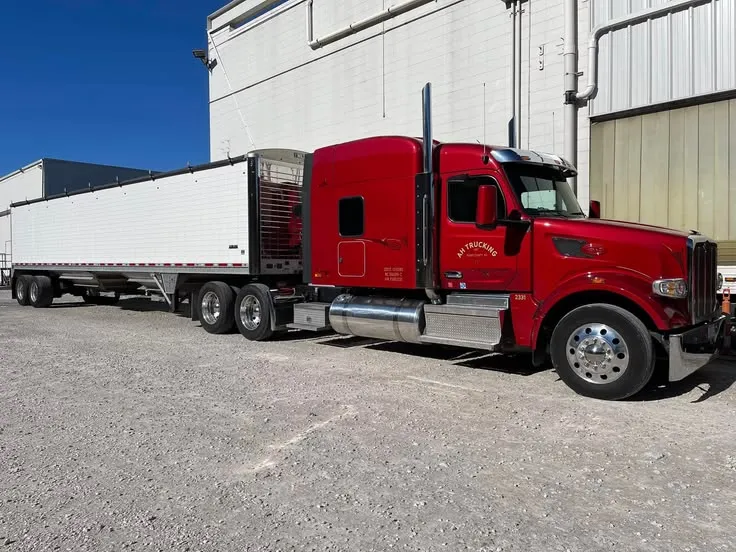
Businesses occasionally require the use of a trailer that is already located somewhere else and needs to be towed to another location by a tractor and driver. This form of transportation could be very helpful if the company operates its own trailers or if equipment needs to be moved from one facility to another. There are several considerations to take into account when choosing the right transportation provider: equipment compatibility, service coverage, communication, scheduling, and experience. A thorough analysis will enable businesses to identify a transportation solution that is right for their normal freight requirements.
Understand Your Requirements
Any business that wants to contact providers needs to determine what the transportation arrangement entails. Know where the trailer is and where it should be moved, when it should be moved, and when it is empty or loaded.
The type and condition of the trailer also should be checked. The carrier must have accurate information on the tractor’s size and capacity, and also what the trailer is and how much weight it can carry before it becomes unsafe for the tractor to connect to it and transport it.
Additionally, businesses should determine if the movement is to be made one time or part of a regular transportation pattern. A service arrangement for regular movements is likely to be different from repositioning occasional equipment.
Check Equipment Compatibility
The power of transportation depends on the proper connection of tractor and trailer. The business should give correct trailer details prior to arranging a move.
Information like trailer type, identification, pick-up location and equipment condition can aid the provider in preparing properly. Whenever further equipment or procedures in facilities are used, they should be communicated beforehand.
Preparing for these ins and outs before they are picked up can decrease the confusion that may happen once the driver reaches your location.
Evaluate Service Coverage
Geographic coverage is another important consideration when comparing power only trucking companies Georgia. A provider may operate throughout the state but have different levels of availability depending on the specific route.
Their regular pickup and delivery points should be clarified by businesses. It’s particularly beneficial for businesses that transport trailers from one warehouse to another, a distribution center to a manufacturing plant and other commercial locations.
A provider who is aware of the company’s frequent routes might be better equipped to handle the company’s frequent transportation needs.
Consider Scheduling Flexibility
Power can only be impacted by timing in the same way that it is impacted in other freight movements transportation. Accurate pickup and delivery windows should be shared with businesses prior to the shipment.
Some facilities may call for an appointment, and there are other facilities that may have loading/receiving specific times. These requirements should be made known to the transportation provider.
If the company has regular or frequent movements, it may want to ask the provider if they can handle the regular and occasional movement. The number of trailers to move may vary depending on season or changes in operations.
Review Communication Practices
Communication will help ensure coordination among the various parties who are using a power-only movement. There may need to be information passed among the trailer owner, transportation provider, pickup location, and receiving location.
When evaluating power only trucking Georgia services, businesses should consider how shipment updates and schedule changes are communicated.
An easy-to-use contact process can help ensure that the information for pickup is confirmed, that the address is changed, and that the delivery information is shared. This can be a great help when multiple trailer moves are in progress at the same time.
Look at Relevant Experience
Familiarity with comparable transportation needs will be helpful. It is important to ask businesses whether a provider routinely makes power-only moves and is familiar with the equipment and coordination involved.
It isn’t just about years in the industry being relevant experience. Knowledge of comparable trailers, routes, facilities and scheduling needs may be more beneficial to a company’s needs.
Businesses can describe their regular movements and inquire if the provider has experienced similar movements.
Compare Overall Service Fit
When shopping around for business services, it is important to take a look at the whole deal and not just the individual factor. The overall fit may be impacted by equipment compatibility, geographic coverage, scheduling, communication, and operational experience.
Cost also should be taken into account, but the lowest rate is not necessarily the best transportation option. A provider who recognizes the need for a recurring supplier and is able to articulate this in a clear manner might be more of a practical service.
Companies should narrow the candidates down to a short list of the key factors that are important for their business and stick to them throughout the process of choosing options.
Prepare Information Before Booking
With the right information at your fingertips, booking will be smoother. Businesses should plan and have the details of the trailers, pickup/delivery address and dates, facility contacts, and any instructions they may have.
When there is freight in the trailer, any information concerning the contents may be relevant. Movement by weight, size and delivery needs can assist the transportation provider in understanding the movement.
Keeping these details in order makes it much easier to plan later if you ever need to do similar trailer runs again.
Build a Reliable Transportation Process
Once you pick the right team, set simple rules for daily runs to keep things steady. Clear paperwork and basic talk plans help stop extra back-and-forth chatter.
It is advisable to review the transportation needs periodically, however. New needs may arise due to changes in warehouses, shipment quantities, customer needs or equipment availability.
One of the providers that can make changes in a reasonable way could be a valuable element in the comprehensive logistics process of a company.
Conclusion
When determining a power-only transportation provider in Georgia, the equipment compatibility, geographical coverage, scheduling, communication, and relevant experience are all important factors to consider. Before comparing providers, businesses should be familiar with their trailer needs and make sure to explain them. Consider the overall service rather than only one of the factors, and a more practical transportation decision will be made. If companies are exploring any power-only or other freight transportation solutions, they can visit ykfreight.com to discover services offered and which ones are appropriate for their shipping requirements.