
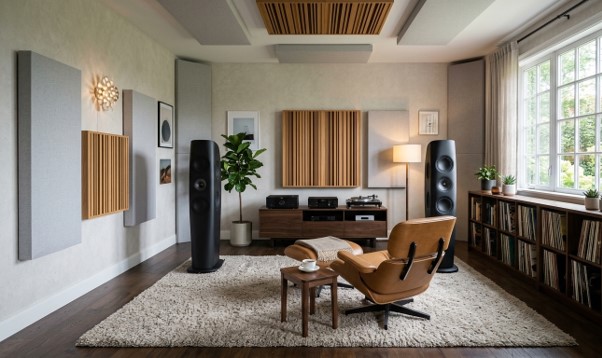
A beautifully furnished listening room can still produce disappointing sound when hard surfaces repeatedly reflect audio waves. Voices become difficult to distinguish, instruments lose definition, and musical recordings develop an unnatural sense of reverberation. Installing properly selected acoustic absorption panels can address these problems by controlling unwanted reflections before they interfere with direct sound. Unlike replacing speakers or amplifiers, this approach focuses on improving the listening environment itself. Understanding how absorption works helps us create more balanced spaces for music, movies, and everyday entertainment.
Understanding What Happens To Reflected Sound
Sound travels outward from loudspeakers and interacts with walls, ceilings, floors, and surrounding furniture. Hard surfaces reflect much of this energy, allowing delayed versions of the original signal to reach our ears. When numerous reflections accumulate, they can obscure subtle details and increase reverberation. Absorptive materials reduce selected reflections by converting part of the sound energy into small amounts of heat. We should remember that absorption varies by frequency, material, and thickness. Effective treatment therefore requires understanding the room’s acoustic behavior rather than simply covering available surfaces.
Improving Vocal Clarity During Everyday Listening
Speech intelligibility is especially important in home theaters, media rooms, and entertainment spaces used for conversation. Strong reflections can overlap with spoken words, reducing clarity even when the volume remains comfortable. Appropriately positioned absorbers help control these delayed sounds, allowing dialogue and vocals to remain more distinct. This improvement can be particularly noticeable in rooms with hardwood flooring, uncovered windows, or large exposed walls. We should evaluate how clearly familiar voices sound before and after treatment, rather than assuming that louder playback automatically solves communication or listening difficulties.
Controlling Early Reflections Around Speakers
Early reflections are sounds that reach the listening position shortly after arriving directly from the speakers. Depending on their timing and strength, these reflections can influence tonal balance and stereo imaging. Common reflection areas include sidewalls, ceilings, and nearby furniture surfaces. Carefully positioned sound absorption panels can reduce disruptive energy at selected locations while preserving useful room ambiance. We should identify these areas through acoustic measurements or established placement methods. Treating every wall equally may produce unnecessary absorption without improving the most important listening problems.
Selecting Materials For Different Frequencies
Not all acoustic materials absorb the same frequencies equally. Thin porous treatments often work primarily in the middle and higher frequency ranges, while lower frequencies generally require deeper absorbers or specialized designs. Vicoustic’s Cinema Round Premium is intended for medium- and high-frequency absorption and carries a published Noise Reduction Coefficient of 0.95. Its performance illustrates why product specifications deserve attention. We should examine absorption data across relevant frequencies because a single overall rating cannot fully describe how a panel performs throughout the audible spectrum.
Balancing Absorption With Natural Room Ambiance
An acoustically comfortable room should control problematic reflections without eliminating every sense of spaciousness. Excessive absorption can create an unnaturally subdued environment, particularly when treatment concentrates on higher frequencies while leaving other acoustic issues unresolved. Diffusers provide a different function by redistributing sound energy instead of primarily absorbing it. Combining both approaches can preserve useful spatial characteristics while reducing disruptive reflections. We should assess the room’s intended purpose before deciding on treatment quantities. A dedicated cinema may require different acoustic conditions from a casual music lounge or multipurpose living space.
Integrating Acoustic Treatment Into Interior Design
Effective treatment does not need to compromise a carefully designed interior. Modern acoustic products are available in various finishes, patterns, and configurations that complement residential spaces. Vicoustic Flat Panel VMT products provide another specialized acoustic treatment option. These panels provide design flexibility while addressing medium- and high-frequency reflections. We should consider mounting requirements, available wall space, material maintenance, and appropriate fire-safety ratings during selection. A coordinated installation allows acoustic improvements to become part of the room’s architecture rather than appearing as an unrelated technical addition.
Conclusion
High-quality listening experiences depend on the relationship between audio equipment and the surrounding environment. Managing reflections, maintaining suitable reverberation, and preserving natural spatial characteristics can improve the enjoyment of familiar recordings without demanding an entirely new entertainment system. With its selection of Vicoustic products and dedicated acoustic treatment solutions, epicsystems.tech provides options for homeowners looking to refine their listening spaces. A room-specific acoustic consultation can identify appropriate materials, treatment locations, and installation requirements, helping create an environment where clarity and comfort work together.
Frequently Asked Questions
Q1. What is the main purpose of an absorption panel?
It reduces sound reflections within its effective frequency range, potentially improving speech intelligibility and listening clarity.
Q2. Can absorption panels soundproof a room?
No. Controlling reflections inside a room is different from preventing sound from passing through building structures.
Q3. Where should wall absorbers be installed first?
Early-reflection locations are often useful starting points, but placement should reflect room layout and listening goals.
Q4. Can too many panels make a room sound dull?
Yes. Excessive high-frequency absorption can reduce natural ambience without adequately solving lower-frequency problems.
Q5. Are decorative acoustic panels equally effective?
No. Compare frequency-specific absorption data, mounting arrangements and materials rather than relying on appearance alone.